
Older Americans’ Views on Medicare Obesity Care Access
by OCAN
Key Takeaways
The Massive Awareness Void: A staggering 82% of all older Americans—including 79% of Republicans and 84% of Democrats—are completely unaware of emerging Medicare benefits designed to cap out-of-pocket GLP-1 obesity medication costs at roughly $50/month.
The Clinical Conversations Gap: While clinical definitions estimate that 40% of older Americans live with obesity, only 27% have been told by a doctor that they medically qualify for weight management help. This indicates that at least 1 in 3 likely eligible seniors have never had a formal clinical conversation about their treatment options.
A Bipartisan Mandate for Parity: Six in ten seniors (61%) believe Medicare should cover obesity with the same parity as other chronic conditions like diabetes or heart disease, with nearly 30% viewing it as a critical priority by scoring it a perfect 10 out of 10. This demand spans political lines, backed by 60% of Republicans and 67% of Democrats.
A New Benchmark for Plan Quality: Over half (51%) of all older Americans view GLP-1 coverage as a key standard of quality for Medicare Part D plans. Among those with an established medical need, that number rises sharply to 74% who view it as important or very important.
High Part D Plan Volatility: Over a third (35%) of all seniors state they are likely to switch Part D plans if their current carrier opts out of obesity coverage pilots. This consumer threat spikes to 58% among medically eligible beneficiaries who are actively prepared to switch plans to protect their access.
The Strategic Policy Pivot: Because the survey was conducted immediately prior to CMS shifting timelines from the Part D-driven BALANCE model to the newly extended GLP-1 Bridge program (running through December 2027), closing this massive awareness gap before the Bridge launch on July 1, 2026, is critical for both providers and patient advocacy networks.
Summary
To evaluate how well older Americans understand emerging healthcare benefits, OCAN surveyed 2,130 seniors aged 65+ from March 27–28, 2026. The findings underscored a severe awareness gap, with 82 percent of respondents unaware of new pathways to affordable GLP-1 medications. Analysts should note the shifting policy backdrop during this study: CMS initially announced the Part D-driven BALANCE Model with a shift to focusing on the GLP-1 Bridge program, which extends through December 2027. Consequently, the survey questions focused broadly on awareness of an unnamed Medicare benefit rather than distinguishing between the BALANCE and the CMS GLP-1 Bridge models.
Medical Eligibility and the Awareness Gap
Roughly 40 percent of older Americans are estimated to have obesity based on clinical definitions (BMI 30+), yet this survey found that only 27 percent have been told by a doctor that their weight or a related health condition qualifies them for medical help with weight management. This gap suggests that at least one in three older Americans who likely meet eligibility criteria have not yet had a formal clinical conversation with their doctor about medical weight management.
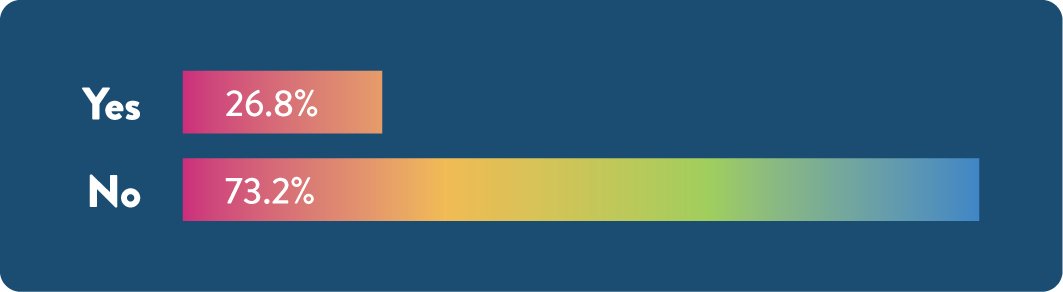
Awareness of a Medicare program that would allow seniors to access GLP-1 obesity medications for about $50 per month is remarkably low across the board. Approximately 82 percent of all older Americans—including 79 percent of Republicans and 84 percent of Democrats—say they had not heard of a new Medicare program.
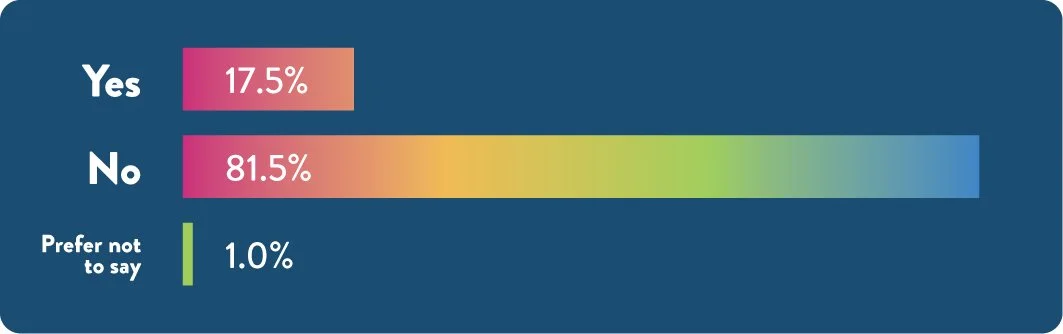
This near-universal lack of awareness cuts across partisan lines and demographic groups, underscoring a significant informational gap between what will be available and what beneficiaries currently know.
Importance of Medicare Obesity Coverage
When asked how important it is that Medicare cover obesity treatments the same way it covers other chronic conditions such as diabetes or heart disease, six in ten older Americans (61 percent) rated this as important or very important, scoring it seven or higher on a ten-point scale.
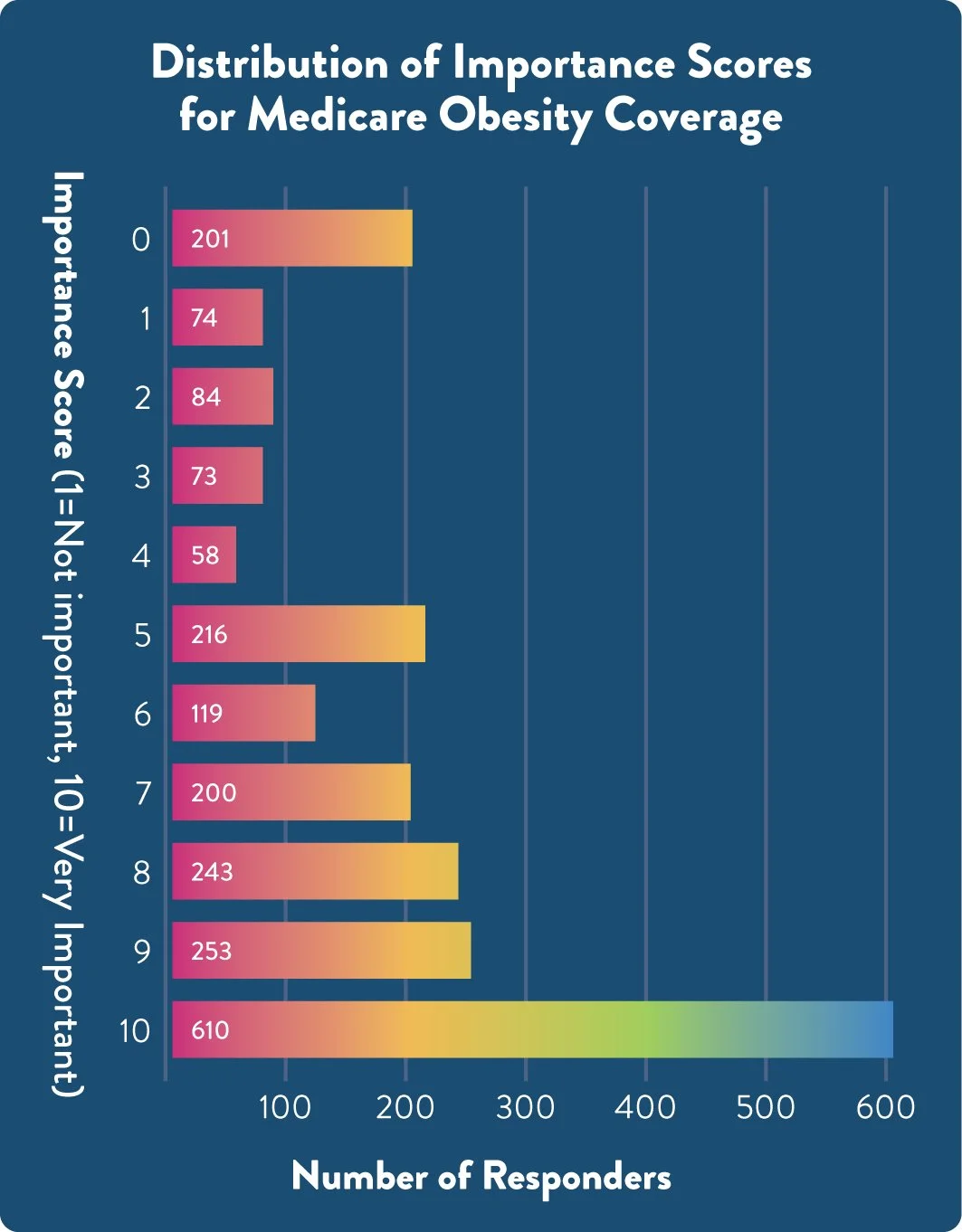
Nearly three in ten (29 percent) of older Americans gave a perfect score of ten out of ten for the importance of this coverage, indicating that for a substantial share of the Medicare population, this is not a marginal issue but a fundamental right of healthcare, equal to diabetes or heart disease treatment coverage.
Support for obesity coverage is even stronger among those with a personal stake; however, while personal health history influences the intensity of the response, a clear majority believe Medicare coverage should be available regardless of a prior medical diagnosis.
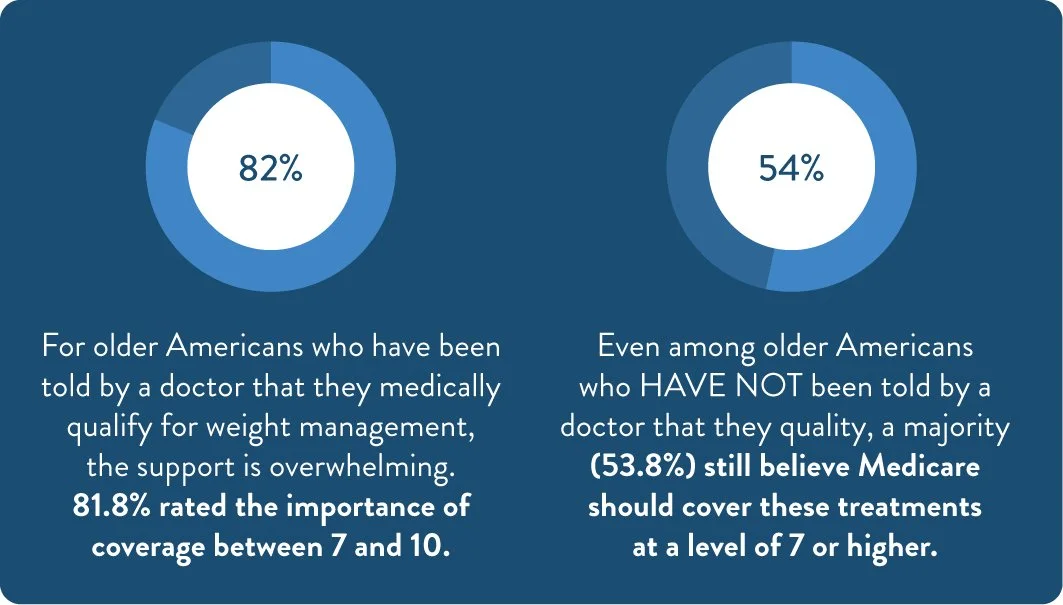
Among older Americans who have been told by a doctor that they medically qualify for weight management, 82 percent rated the importance of coverage at seven or higher (out of ten) compared to 54 percent of those who have not received such a clinical recommendation. This suggests that older Americans broadly view this as a matter of healthcare fairness and modernization, not just personal need.
GLP-1 Coverage as a Benchmark for Part D Plan Quality
A majority of older Americans now view GLP-1 coverage as a standard of quality for Medicare Part D plans. Over half (51 percent) rate it as important or very important (seven or higher), and one-third give it a score of 9 or 10 (very important). The data shows that for roughly one in two older Americans, access to GLP-1 medications has become a benchmark for a quality Part D plan.
Among older Americans with an established medical need, support is both broader and more intense. Four in five (80 percent) rate GLP-1 Part D coverage as at least somewhat important, and nearly three in four (74 percent) rate it as important or very important. More than half (58 percent) rate it a score of 9 or 10. For this cohort, GLP-1 coverage has become a high-stakes, top-tier priority in health plan decision-making.
Likelihood of Switching Part D Plans
As the GLP-1 Bridge program launches in July 2026 to provide individual coverage under a centralized system outside of the current Part D plan structure, the future of the originally planned BALANCE program providing coverage under Part D plans remains in question. OCAN’s survey asked whether older Americans would be motivated to switch Part D plans during the next enrollment period in the event that their current plan did not join the BALANCE model. It must be noted that older Americans were surveyed before the delay of the BALANCE model was announced by CMS.
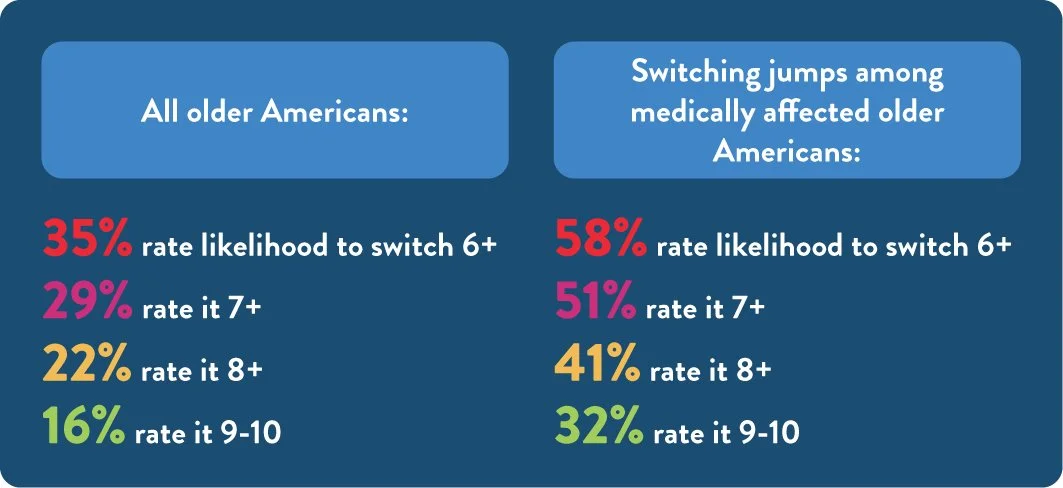
Over a third (35 percent) of older Americans say they would likely switch to a Part D plan that participates in the BALANCE model if their current plan does not, rating their likelihood a six or higher out of ten. Twenty-two percent rate their likelihood at eight or higher, and 16 percent say they are highly likely to switch. Switching intent increases sharply among those with a medical diagnosis. Among older Americans who have been told they qualify for medical weight management, 58 percent rate their likelihood of switching at six or higher, 41 percent rate it at eight or higher, and 32 percent rate it at nine or ten.
Notably, more than half (52 percent) of those who indicate a high likelihood of switching have not yet been told by a doctor that they medically qualify. This suggests that plan-switching behavior extends well beyond those with immediate clinical needs. A substantial share of potential switchers appears to view GLP-1 access as a signal of overall plan quality and a commitment to treating obesity as a serious chronic disease.
Of the nearly one-third (29 percent) of older Americans who would be likely or very likely (seven+) to switch Part D plans if their current plan doesn’t join the new program, nearly half of these high-intent switchers have already been told by a doctor that they medically qualify for weight management help. Of the high-intent switchers, the vast majority (79 percent) were not yet aware of the Medicare program at the time they were surveyed. Notably, there is also cross-party consensus on switching: high-intent switchers are almost evenly split between Republicans (37 percent) and Democrats (37 percent), with a strong Independent showing (23 percent).
This indicates that many beneficiaries have already formed strong views about plan quality before learning what is becoming available, reinforcing the urgency of outreach and education efforts as key access dates approach.
Bipartisan Support
Support for Medicare obesity coverage and GLP-1 access is consistent across political party lines. Among Republicans, 29 percent have been told by a doctor they qualify for medical weight management; among Democrats, the figure is 28 percent. Awareness of a Medicare program that will soon offer coverage for GLP-1s for around $50 per month is similarly low in both groups, 79 percent of Republicans and 84 percent of Democrats report not being aware of the new program.
When it comes to the importance of Medicare covering obesity treatments, similar to other chronic diseases, 60 percent of Republicans and 67 percent of Democrats rate this as a high priority (seven or higher). Support for GLP-1 Part D coverage follows a similar bipartisan pattern: 50 percent of Republicans and 55 percent of Democrats rate it as important or very important. As mentioned above, high-intent plan switchers are nearly evenly split by party affiliation.
Implications
This poll reveals a significant disconnect between the growing availability of medical obesity treatment and what older Americans know about their options. The vast majority of Medicare beneficiaries—regardless of health status, political affiliation, or prior experience with obesity medications—are unaware that a meaningful new pathway to GLP-1 access is emerging through a new Medicare program.
At the same time, the data show that once people understand what is at stake when it comes to accessing treatment at an affordable price, their response is strong. Most older Americans believe obesity should be treated like any other chronic disease, and a meaningful share—particularly those who are medically eligible—are prepared to act on that belief by switching plans. For Medicare Part D insurers, this represents both a risk and an opportunity: beneficiaries are already using GLP-1 coverage as a primary measure of plan quality.
The bipartisan nature of this support is particularly striking. Expanding Medicare obesity care coverage is not a partisan issue. Older Americans across the political spectrum believe this coverage matters, and a significant proportion are willing to change plans if theirs does not provide it.
With the opening of the new GLP-1 Bridge program approaching on July 1, 2026, there is an urgent need to close the awareness gap about the availability of more affordable coverage outside of older Americans’ current Part D coverage. Health care providers, pharmacists, and advocates alike have a critical window to ensure that eligible older Americans understand what will soon be available, and that stakeholders across the coverage spectrum understand what beneficiaries are demanding. The next year will be critical to identify additional data on awareness and uptake as CMS explores how to continue access to obesity treatments after the Bridge program is set to sunset.
About the Survey
This report presents findings from a nationally representative online survey of 2,130 U.S. adults aged 65 and older, conducted March 27–28, 2026. The survey was commissioned by the Obesity Care Advocacy Network (OCAN). The margin of error is ±2 percentage points at a 95 percent confidence level. The sample was weighted to reflect national population figures.
About the Obesity Care Advocacy Network
The Obesity Care Advocacy Network (OCAN) is a diverse coalition of organizations and stakeholders united by a single, powerful mission: to change how the United States perceives and approaches the obesity epidemic. By aligning the broader obesity community, OCAN works to elevate obesity on the national agenda. The network drives meaningful education, policy, and legislative efforts to ensure individuals have comprehensive access to evidence-based obesity treatments and care.